Installation & Application
Guides, videos, and best practices for installing materials.
No questions match that search.
General Installation Questions
Check our Resources page to find all available sound deadening resources for your install.
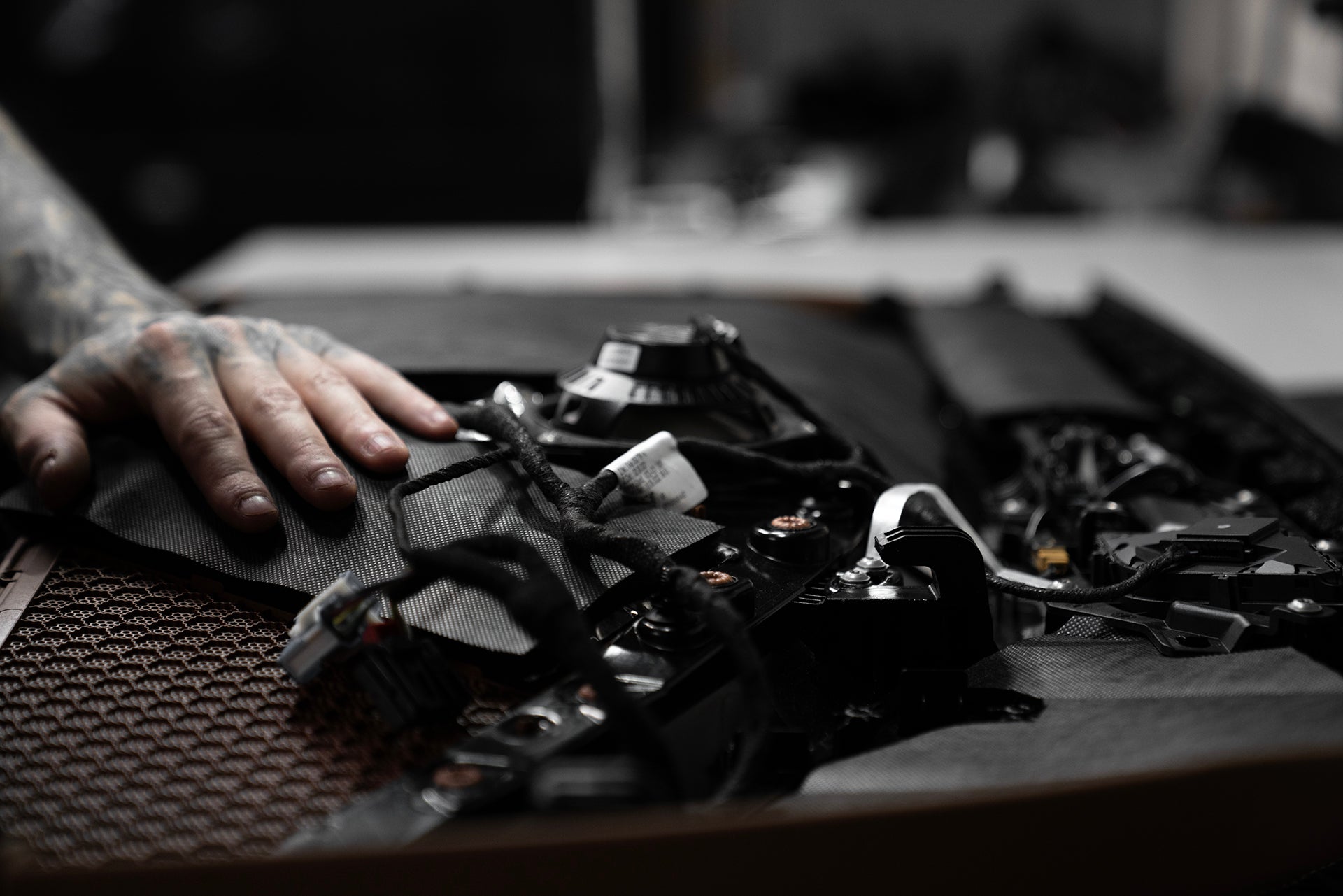
Installation usually requires removal of most of the interior and is time-consuming, but it is possible for most capable DIYers.
Contact us for vehicle-specific recommendations.
If the sub is exposed to cargo, loose items, pets, or daily life, then yes, we would recommend a grille for protection. A damaged cone, surround, or dustcap is usually preventable with basic protection, and is not covered under warranty. We do not offer grilles of our own at the moment.
We always recommend using our ResoNix CCF Decoupler 3F Tape for gasketing speakers and baffles to prevent air leaks, but the ResoNix GUS series subwoofers already feature a rubber mounting ring gasket that takes care of this, so no other products are needed.
There is very little real world difference in sound between the two. I know that sounds crazy, but I promise that is the case. Go with whatever option makes the installation easier, more reliable, and more easily serviced.
It is almost always installation, tuning, or OEM integration, not the subwoofer itself. If you are integrating into an OEM system using the factory high-level signal, that is the first thing to suspect, because it is often distorted and compressed before it ever reaches your aftermarket gear. If you are not using the OEM high-level signal, the next most likely culprits are installation and tuning issues, enclosure alignment, leaks, gain structure, filtering, crossover, phase, and EQ choices.
The correct connection method depends on your vehicle, head unit, and factory audio system. Contact the ResoNix technical support team for a vehicle-specific integration recommendation.