ResoNix GUS Series Shallow SQL Subwoofers

ResoNix GUS Series Shallow SQL Subwoofers

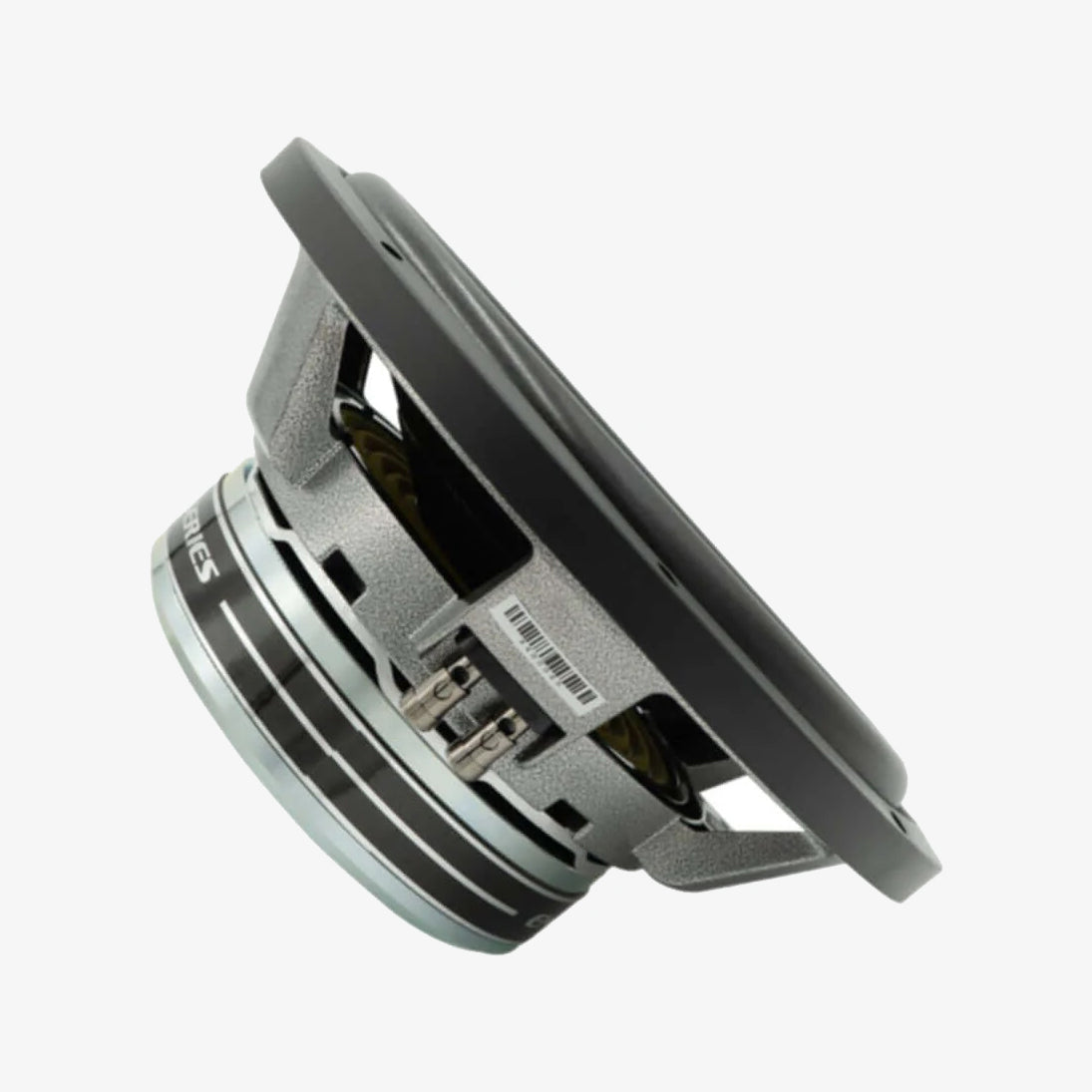
ResoNix GUS is a no compromise shallow SQL subwoofer built for real output, ultra low distortion, and deep extension in genuinely small sealed boxes. Every design choice is backed by full Klippel testing, giving you true performance instead of marketing claims.


  • In stock, ready to ship
  • Backordered, shipping soon

Go to independent subwoofer testing page

Customers who bought this also loved this!

ResoNix GUS Shallow SQL Subwoofers

Geometrically Uncompromised Subwoofer


The ResoNix GUS line is our next major step forward, and honestly, something the car audio world has needed for a long time. This line of subwoofers is designed and built around one idea, create a subwoofer that does not compromise in any direction. We wanted shallow mounting depth, real output capability, extremely low distortion, and excellent low frequency extension in genuinely small sealed enclosures. Many companies claim to offer this, but nobody has been able to deliver all of it at the same time until now. The GUS line changes that. GUS, while named after my cat Gustavo, also stands for Geometrically Uncompromised Subwoofer, which describes the design goal perfectly. No compromises on geometry, no compromises on performance, and true to our motto, no gimmicks, no BS, pure performance.

I think I already know what the most popular first question will be.... Price?

Expected Prices
GUS-10: $650
GUS-12: $799
GUS-15: $999

Yes, there will be a pre-order discount when the sale is live. Projected start of pre-sale is March 2026. Projected ship date to customers is early May, maybe late April of 2026 if all things go well.


Be sure to check out The First Review by someone who got to hear our GUS-12 Pre-Production Prototype Revision 1 in my personal vehicle!


Why We Made Them

Over the years, all of my favorite high performing subwoofers have been discontinued, and nothing currently on the market has impressed me. Everything that claimed to be shallow, or low distortion, or capable in tiny boxes either exaggerated the spec sheets or could not live up to their claims in real systems. I got tired of settling, and I got tired of waiting for someone else to make the subwoofers that I, and many others, wanted to run. So, I did what I always do. We built our own, and we made them the best. The GUS line is the result of countless hours of discussion, planning, design, testing, and refinement. It is the subwoofer I had always wished existed.


Models and Power Ratings

The GUS line launches in three sizes. A 10 inch rated for 500 watts, a 12 inch rated for 1000 watts, and a 15 inch rated for 2000 watts. All are available in dual 2 ohm and dual 4 ohm. These power ratings are based on a Qtc of 0.707 sealed alignment, but real power handling will vary depending on enclosure size, but they give a realistic baseline for performance in proper sealed installations.


Enclosure Requirements

Extremely small sealed enclosures were a non negotiable design requirement. My goal was to have subwoofers that extend with real authority and output into the ultra low subsonic frequencies in a way you can actually feel, not just something your mic registers, and to do it in enclosure sizes that most people would consider impossible for this level of performance.

  • GUS-10 is optimized for a 0.6 cubic foot QTC of 0.707 enclosure and still performs extremely well in 0.35 cubic feet with a QTC of 0.870.
  • GUS-12 is optimized for 0.7 cubic feet, but performs exceptionally in 0.45 cubic feet with a QTC of 0.840. That is what my prototype is currently in, and the low frequency extension and distortion profile are already better than anything else we have tested in this size.
  • GUS-15 is optimized for 1.3 cubic feet, yet works great in 0.8 cubic feet with a QTC of 0.850.


In a vehicle, these slightly higher Q alignments are perfectly acceptable and still extremely predictable. For example, I currently have the 12 inch in my car in 0.5 cubic feet, and it has no trouble extending flat to 12 Hz.

These are real enclosure requirements. No inflated volumes, no marketing tricks, and no excuses.


Performance Highlights

The main goal was simple, deliver industry leading distortion and output capability relative to the shallow depth and tiny box volume. The GUS line accomplishes exactly that. Distortion is extremely low across the board. Low frequency extension is far beyond what should be possible in this much airspace. Transient response is clean and controlled. And xmax capability is real, not a cherry picked optimistic number. Every major element of the design is fully optimized through Klippel LSI testing. Motor symmetry, suspension linearity, inductance stability, thermal behavior, and mechanical limits are all verified through controlled measurement.


Engineering and Materials

We started with a high motor force, ultra low inductance overhung motor design, which allowed us to get the motor strength needed for real low frequency extension in genuinely small sealed enclosures. From there, the focus was simple, maximize linearity and minimize distortion. The motor geometry, coil length, gap structure, and flux distribution were all built to deliver clean, predictable force across the entire stroke instead of chasing saved pennies, high profits, and a nonsense marketing xmax number. The result is a motor with extremely stable and linear BL and inductance across stroke, excellent symmetry, and real, verified usable excursion.

Copper shorting rings keep inductance low and controlled, which is a major reason why the GUS line has such low distortion and such clean transient behavior. The titanium former eliminates eddy currents and keeps thermal behavior stable under heavy use.

The cone uses a honeycomb Nomex core with a carbon fiber facing. This structure gives us an extremely stiff, yet extremely light diaphragm that resists the flex and breakup modes that typically show up in shallow geometry designs and flat cones. Keeping the cone stable directly reduces distortion and keeps output clean at high excursion.

Every part of the system was, and still is being further optimized and validated through full Klippel LSI testing. Motor symmetry, suspension linearity, inductance behavior, thermal behavior, mechanical stroke limits, and distortion mechanisms were all confirmed through controlled measurement, not guesses or optimistic simulations.

All of this comes together to deliver the performance goals we set from the beginning. Extremely low distortion, clean transient response, stable behavior at high stroke, and real output capability in enclosure sizes that would normally cripple a driver. Every decision came down to one overarching goal. No shortcuts, period.


How This Compares in the Real World

Almost every shallow, and even regular depth subwoofer on the market that’s geared for sound quality systems is marketed as clean, high excursion, and capable in tiny boxes. The problem is that most of them fall apart as soon as you look at actual distortion and LSI (BL(x), CMS(x), Le(x), and QTS(x)) behavior. We have already tested most of them on a full Klippel LSI and TRF setup. The GUS prototypes outperform all of them on the metrics that matter. Distortion is lower, inductance is more stable, motor force stays cleaner through stroke, and the usable output is higher. The difference is not subtle.


Independent Testing and Transparency

We will be publishing full Klippel LSI and TRF data for every model in the GUS line, along with the upcoming PTR and ODIN lines. The same level of transparency used in our independent subwoofer testing project will apply here, with the same format and the same test methodology. If you want objective data and real measurements, we are the only ones willing to nut up or shut up and show all of our cards. Weird, I wonder why.


Our Promise

The GUS line of shallow subwoofers is not just another product release that will further saturate the market. This is our biggest, and best project to date, and it sets the direction for the next chapter of ResoNix while still continuing our mantra of No gimmicks, no BS, pure performance, with real engineering, real measurements, and real performance that we fully stand behind. This is the subwoofer that I have always wanted. Now we get to share it with you.


March 27th, 2025: The first discussions of the ResoNix subwoofers begin, and our previous favorite drivers that have comparable uses cases were sent off for Klippel testing.

April 2nd, 2025: The Klippel testing results on one of our previous favorite subwoofers that covers a similar use case as our GUS lineup were sent back to us. A plan for the GUS line of subwoofers is put into place and we discussed what we can expect and how we can go about offering the best products for their designated use case.

April 9th, 2025: Simulations of the motors and suspensions of the designs we have discussed were presented to us. A few of our previous-favorite subwoofers for ultra-shallow use cases arrived to the test facility.

April 29th, 2025: Klippel test results came back for our previous-favorite ultra-shallow subwoofers that we had sent in. A plan is discussed for what we can do for our upcoming line of PTR Ultra-Shallow subwoofers and how we can make them the best for their specific use case.

May-June 2025: More discussion and details regarding the GUS line of subwoofers. A few more subwoofers that I personally know and have a reference for performance of are sent in for Klippel testing.

July 2025: I open public submissions for people to submit various subwoofers for Klippel testing, with strict requirements for condition of the sample.

August 11th, 2025: ResoNix publicly announces that we are in the middle of development for our own lines of subwoofers. Pictures of our first pre-production prototype of the GUS-12 being assembled are shared. Goals of each model/size are also shared.

August 21st 2025: The first ResoNix GUS-12 pre-production prototype is Klippel tested, with exceptional results, but with slight improvements to be had. Prototype 2 of the GUS-12 is started.

Early September 2025: The second ResoNix GUS-12 pre-production prototype is finished with the slight adjustments made, but we quickly realized we that these fixes needed to be done in slightly different ways, so this one was immediately scrapped. With this new findings in mind, we started the development of the first 10" and 15" pre-production prototypes of the GUS line of subwoofers.

October 8th, 2025: The first ResoNix GUS-15 pre-production prototype is completed and Klippel tested. The results were essentially perfect thanks to the experimenting on the 12" platform first. We considered the 15" ready for production prototypes after this first one.

October 15th, 2025: The first ResoNix GUS-10 pre-production prototype was completed and Klippel tested. The results were similar to the 15's thanks to our previous experimentation on the 12" platform, and were nearly perfect aside from having slightly too small of a surround on hand to make it (which we knew about during assembly).

November 20th, 2025: The first ResoNix GUS-12 pre-production prototype is installed into my personal vehicle in a 0.5 cubic foot enclosure in the passenger footwell for some quick testing. The RTA and EQ graphs you see in the photos are from this day. The next day it is brought to a get-together here in NY for people to experience.

December 5th, 2025: The first round of Klippel tests of other subwoofers was made public. These were first being used for R&D of our own subwoofers, but later on we decided to make them public for everyone to be able to access.

December 9th, 2025: The third pre-production prototype of the ResoNix GUS-12 is completed and tested. It exceeds expectations and we give it the stamp of approval as ready for production prototypes.

Re 2.17 ohms
Le 0.49 mH
FS 16.91 Hz
QTS 0.35
QES 0.36
QMS 11.89
BL 13.276 N/A
MMS 277.657 g
CMS 0.32 N/mm
SD 346.36 cm2
VAS 53.7803 l
Xmax @ BL 70% 18.37mm
Xmax @ CMS 50% 17.17mm - will be fixed on revision 2
Xmax @ Le 17% >18.55mm - Not reached within our ±17 mm evaluation window on this sample
Suggested enclosure size for 0.707 QTC 0.6 ft³
Minimum suggested enclosure 0.35 ft³ - Nets a QTC of 0.87
Maximum suggested enclosure 0.9 ft³ - Nets a QTC of 0.64. xmax limit is reached with 300 watts at 20Hz in this enclosure.
Re 6.82 ohms (wired in series)
Le 1.97 mH
FS 14.54 Hz
QTS 0.28
QES 0.28
QMS 9.08
BL 27.268 N/A
MMS 339.842
CMS 0.35 mm/N
SD 490.87 cm2
VAS 119.3473 l
Xmax @ BL 70% 20.69mm
Xmax @ CMS 50% >20.89mm - Not reached within our ±20.89 mm evaluation window on this sample
Xmax @ Le 17% >20.89mm - Not reached within our ±20.89 mm evaluation window on this sample
Suggested enclosure size for 0.707 QTC 0.75 ft³
Minimum suggested enclosure 0.45 ft³ which nets a QTC of 0.87.
Maximum suggested enclosure 1.5 ft³ which nets a QTC of 0.56. xmax is reached with 500 watts in this enclosure size.
Re 1.94 ohms (wired in parallel)
Le 0.55 mH
FS 17.11 Hz
QTS 0.34
QES 0.34
QMS 16.45
BL 20.165 N/A
MMS 669.468 g
CMS 0.13 mm/N
SD 804.25 cm2
VAS 117.4685 l
Xmax @ BL 70% 25.89mm
Xmax @ CMS 50% >26.02 - Not reached within our ±26.02 mm evaluation window on this sample
Xmax @ Le 17% >26.02 - Not reached within our ±26.02 mm evaluation window on this sample
Suggested enclosure size for 0.707 QTC 1.35 ft³
Minimum suggested enclosure 0.8 ft³ - Nets a QTC of 0.85
Maximum suggested enclosure 2 ft³ - Nets a QTC of 0.62. xmax is reached at 20Hz with 1600 watts in this enclosure size.
ResoNix GUS-10 Pre-Production Prototype Revision 1 BL(x) Force Factor ResoNix GUS-10 Pre-Production Prototype Revision 1 CMS(x) ResoNix GUS-10 Pre-Production Prototype Revision 1 Le(x) ResoNix GUS-10 Pre-Production Prototype Revision 1 QTS(x) ResoNix GUS-10 Pre-Production Prototype Revision 1 BL(x) Symmetry Range ResoNix GUS-10 Pre-Production Prototype Revision 1 KMS(x) Symmetry Range ResoNix GUS-10 Pre-Production Prototype Revision 1 Le(i)
ResoNix GUS-15 Pre-Production Prototype Revision 1 BL(x) Force Factor ResoNix GUS-15 Pre-Production Prototype Revision 1 CMS(x) Suspension Compliance ResoNix GUS-15 Pre-Production Prototype Revision 1 Le(x) ResoNix GUS-15 Pre-Production Prototype Revision 1 QTS(x) ResoNix GUS-15 Pre-Production Prototype Revision 1 BL(x) symmetry ResoNix GUS-15 Pre-Production Prototype Revision 1 Le(i)

Pre-Production Prototypes. Specs Subject To Change

ResoNix GUS-10
Outer Diameter: 269.5mm
Mounting Diameter: 235.3mm
Mounting Depth: 104.7mm

Pre-Production Prototypes. Specs Subject To Change

ResoNix GUS-12
Outer Diameter: 322mm
Mounting Diameter: 284.6mm
Mounting Depth: 116.5mm

Pre-Production Prototypes. Specs Subject To Change

ResoNix GUS-15
Outer Diameter: 391mm
Mounting Diameter: 356.17mm
Mounting Depth: 150.7mm

ResoNix GUS Series Shallow SQL Subwoofers Specifications

ResoNix GUS Shallow SQL Subwoofers

Geometrically Uncompromised Subwoofer


The ResoNix GUS line is our next major step forward, and honestly, something the car audio world has needed for a long time. This line of subwoofers is designed and built around one idea, create a subwoofer that does not compromise in any direction. We wanted shallow mounting depth, real output capability, extremely low distortion, and excellent low frequency extension in genuinely small sealed enclosures. Many companies claim to offer this, but nobody has been able to deliver all of it at the same time until now. The GUS line changes that. GUS, while named after my cat Gustavo, also stands for Geometrically Uncompromised Subwoofer, which describes the design goal perfectly. No compromises on geometry, no compromises on performance, and true to our motto, no gimmicks, no BS, pure performance.

I think I already know what the most popular first question will be.... Price?

Expected Prices
GUS-10: $650
GUS-12: $799
GUS-15: $999

Yes, there will be a pre-order discount when the sale is live. Projected start of pre-sale is March 2026. Projected ship date to customers is early May, maybe late April of 2026 if all things go well.


Be sure to check out The First Review by someone who got to hear our GUS-12 Pre-Production Prototype Revision 1 in my personal vehicle!


Why We Made Them

Over the years, all of my favorite high performing subwoofers have been discontinued, and nothing currently on the market has impressed me. Everything that claimed to be shallow, or low distortion, or capable in tiny boxes either exaggerated the spec sheets or could not live up to their claims in real systems. I got tired of settling, and I got tired of waiting for someone else to make the subwoofers that I, and many others, wanted to run. So, I did what I always do. We built our own, and we made them the best. The GUS line is the result of countless hours of discussion, planning, design, testing, and refinement. It is the subwoofer I had always wished existed.


Models and Power Ratings

The GUS line launches in three sizes. A 10 inch rated for 500 watts, a 12 inch rated for 1000 watts, and a 15 inch rated for 2000 watts. All are available in dual 2 ohm and dual 4 ohm. These power ratings are based on a Qtc of 0.707 sealed alignment, but real power handling will vary depending on enclosure size, but they give a realistic baseline for performance in proper sealed installations.


Enclosure Requirements

Extremely small sealed enclosures were a non negotiable design requirement. My goal was to have subwoofers that extend with real authority and output into the ultra low subsonic frequencies in a way you can actually feel, not just something your mic registers, and to do it in enclosure sizes that most people would consider impossible for this level of performance.

  • GUS-10 is optimized for a 0.6 cubic foot QTC of 0.707 enclosure and still performs extremely well in 0.35 cubic feet with a QTC of 0.870.
  • GUS-12 is optimized for 0.7 cubic feet, but performs exceptionally in 0.45 cubic feet with a QTC of 0.840. That is what my prototype is currently in, and the low frequency extension and distortion profile are already better than anything else we have tested in this size.
  • GUS-15 is optimized for 1.3 cubic feet, yet works great in 0.8 cubic feet with a QTC of 0.850.


In a vehicle, these slightly higher Q alignments are perfectly acceptable and still extremely predictable. For example, I currently have the 12 inch in my car in 0.5 cubic feet, and it has no trouble extending flat to 12 Hz.

These are real enclosure requirements. No inflated volumes, no marketing tricks, and no excuses.


Performance Highlights

The main goal was simple, deliver industry leading distortion and output capability relative to the shallow depth and tiny box volume. The GUS line accomplishes exactly that. Distortion is extremely low across the board. Low frequency extension is far beyond what should be possible in this much airspace. Transient response is clean and controlled. And xmax capability is real, not a cherry picked optimistic number. Every major element of the design is fully optimized through Klippel LSI testing. Motor symmetry, suspension linearity, inductance stability, thermal behavior, and mechanical limits are all verified through controlled measurement.


Engineering and Materials

We started with a high motor force, ultra low inductance overhung motor design, which allowed us to get the motor strength needed for real low frequency extension in genuinely small sealed enclosures. From there, the focus was simple, maximize linearity and minimize distortion. The motor geometry, coil length, gap structure, and flux distribution were all built to deliver clean, predictable force across the entire stroke instead of chasing saved pennies, high profits, and a nonsense marketing xmax number. The result is a motor with extremely stable and linear BL and inductance across stroke, excellent symmetry, and real, verified usable excursion.

Copper shorting rings keep inductance low and controlled, which is a major reason why the GUS line has such low distortion and such clean transient behavior. The titanium former eliminates eddy currents and keeps thermal behavior stable under heavy use.

The cone uses a honeycomb Nomex core with a carbon fiber facing. This structure gives us an extremely stiff, yet extremely light diaphragm that resists the flex and breakup modes that typically show up in shallow geometry designs and flat cones. Keeping the cone stable directly reduces distortion and keeps output clean at high excursion.

Every part of the system was, and still is being further optimized and validated through full Klippel LSI testing. Motor symmetry, suspension linearity, inductance behavior, thermal behavior, mechanical stroke limits, and distortion mechanisms were all confirmed through controlled measurement, not guesses or optimistic simulations.

All of this comes together to deliver the performance goals we set from the beginning. Extremely low distortion, clean transient response, stable behavior at high stroke, and real output capability in enclosure sizes that would normally cripple a driver. Every decision came down to one overarching goal. No shortcuts, period.


How This Compares in the Real World

Almost every shallow, and even regular depth subwoofer on the market that’s geared for sound quality systems is marketed as clean, high excursion, and capable in tiny boxes. The problem is that most of them fall apart as soon as you look at actual distortion and LSI (BL(x), CMS(x), Le(x), and QTS(x)) behavior. We have already tested most of them on a full Klippel LSI and TRF setup. The GUS prototypes outperform all of them on the metrics that matter. Distortion is lower, inductance is more stable, motor force stays cleaner through stroke, and the usable output is higher. The difference is not subtle.


Independent Testing and Transparency

We will be publishing full Klippel LSI and TRF data for every model in the GUS line, along with the upcoming PTR and ODIN lines. The same level of transparency used in our independent subwoofer testing project will apply here, with the same format and the same test methodology. If you want objective data and real measurements, we are the only ones willing to nut up or shut up and show all of our cards. Weird, I wonder why.


Our Promise

The GUS line of shallow subwoofers is not just another product release that will further saturate the market. This is our biggest, and best project to date, and it sets the direction for the next chapter of ResoNix while still continuing our mantra of No gimmicks, no BS, pure performance, with real engineering, real measurements, and real performance that we fully stand behind. This is the subwoofer that I have always wanted. Now we get to share it with you.
March 27th, 2025: The first discussions of the ResoNix subwoofers begin, and our previous favorite drivers that have comparable uses cases were sent off for Klippel testing.

April 2nd, 2025: The Klippel testing results on one of our previous favorite subwoofers that covers a similar use case as our GUS lineup were sent back to us. A plan for the GUS line of subwoofers is put into place and we discussed what we can expect and how we can go about offering the best products for their designated use case.

April 9th, 2025: Simulations of the motors and suspensions of the designs we have discussed were presented to us. A few of our previous-favorite subwoofers for ultra-shallow use cases arrived to the test facility.

April 29th, 2025: Klippel test results came back for our previous-favorite ultra-shallow subwoofers that we had sent in. A plan is discussed for what we can do for our upcoming line of PTR Ultra-Shallow subwoofers and how we can make them the best for their specific use case.

May-June 2025: More discussion and details regarding the GUS line of subwoofers. A few more subwoofers that I personally know and have a reference for performance of are sent in for Klippel testing.

July 2025: I open public submissions for people to submit various subwoofers for Klippel testing, with strict requirements for condition of the sample.

August 11th, 2025: ResoNix publicly announces that we are in the middle of development for our own lines of subwoofers. Pictures of our first pre-production prototype of the GUS-12 being assembled are shared. Goals of each model/size are also shared.

August 21st 2025: The first ResoNix GUS-12 pre-production prototype is Klippel tested, with exceptional results, but with slight improvements to be had. Prototype 2 of the GUS-12 is started.

Early September 2025: The second ResoNix GUS-12 pre-production prototype is finished with the slight adjustments made, but we quickly realized we that these fixes needed to be done in slightly different ways, so this one was immediately scrapped. With this new findings in mind, we started the development of the first 10" and 15" pre-production prototypes of the GUS line of subwoofers.

October 8th, 2025: The first ResoNix GUS-15 pre-production prototype is completed and Klippel tested. The results were essentially perfect thanks to the experimenting on the 12" platform first. We considered the 15" ready for production prototypes after this first one.

October 15th, 2025: The first ResoNix GUS-10 pre-production prototype was completed and Klippel tested. The results were similar to the 15's thanks to our previous experimentation on the 12" platform, and were nearly perfect aside from having slightly too small of a surround on hand to make it (which we knew about during assembly).

November 20th, 2025: The first ResoNix GUS-12 pre-production prototype is installed into my personal vehicle in a 0.5 cubic foot enclosure in the passenger footwell for some quick testing. The RTA and EQ graphs you see in the photos are from this day. The next day it is brought to a get-together here in NY for people to experience.

December 5th, 2025: The first round of Klippel tests of other subwoofers was made public. These were first being used for R&D of our own subwoofers, but later on we decided to make them public for everyone to be able to access.

December 9th, 2025: The third pre-production prototype of the ResoNix GUS-12 is completed and tested. It exceeds expectations and we give it the stamp of approval as ready for production prototypes.

Re2.17 ohms
Le0.49 mH
FS16.91 Hz
QTS0.35
QES0.36
QMS11.89
BL13.276 N/A
MMS277.657 g
CMS0.32 N/mm
SD346.36 cm2
Vas53.7803 l
Xmax @ BL 70%18.37mm
Xmax @ CMS 50%17.17mm - will be fixed on revision 2
Xmax @ Le 17%>18.55mm - Not reached within our ±17 mm evaluation window on this sample
Suggested enclosure (0.707 QTC)0.6 ft³
Minimum enclosure0.35 ft³ - Nets a QTC of 0.87
Maximum enclosure0.9 ft³ - Nets a QTC of 0.64. xmax limit is reached with 300 watts at 20Hz in this enclosure.
Re6.82 ohms (wired in series)
Le1.97 mH
FS14.54 Hz
QTS0.28
QES0.28
QMS9.08
BL27.268 N/A
MMS339.842
CMS0.35 mm/N
SD490.87 cm2
Vas119.3473 l
Xmax @ BL 70%20.69mm
Xmax @ CMS 50%>20.89mm - Not reached within our ±20.89 mm evaluation window on this sample
Xmax @ Le 17%>20.89mm - Not reached within our ±20.89 mm evaluation window on this sample
Suggested enclosure (0.707 QTC)0.75 ft³
Minimum enclosure0.45 ft³ which nets a QTC of 0.87.
Maximum enclosure1.5 ft³ which nets a QTC of 0.56. xmax is reached with 500 watts in this enclosure size.
Re1.94 ohms (wired in parallel)
Le0.55 mH
FS17.11 Hz
QTS0.34
QES0.34
QMS16.45
BL20.165 N/A
MMS669.468 g
CMS0.13 mm/N
SD804.25 cm2
Vas117.4685 l
Xmax @ BL 70%25.89mm
Xmax @ CMS 50%>26.02 - Not reached within our ±26.02 mm evaluation window on this sample
Xmax @ Le 17%>26.02 - Not reached within our ±26.02 mm evaluation window on this sample
Suggested enclosure (0.707 QTC)1.35 ft³
Minimum enclosure0.8 ft³ - Nets a QTC of 0.85
Maximum enclosure2 ft³ - Nets a QTC of 0.62. xmax is reached at 20Hz with 1600 watts in this enclosure size.
ResoNix GUS-10 Pre-Production Prototype Revision 1 BL(x) Force Factor ResoNix GUS-10 Pre-Production Prototype Revision 1 CMS(x) ResoNix GUS-10 Pre-Production Prototype Revision 1 Le(x) ResoNix GUS-10 Pre-Production Prototype Revision 1 QTS(x) ResoNix GUS-10 Pre-Production Prototype Revision 1 BL(x) Symmetry Range ResoNix GUS-10 Pre-Production Prototype Revision 1 KMS(x) Symmetry Range ResoNix GUS-10 Pre-Production Prototype Revision 1 Le(i)
ResoNix GUS-15 Pre-Production Prototype Revision 1 BL(x) Force Factor ResoNix GUS-15 Pre-Production Prototype Revision 1 CMS(x) Suspension Compliance ResoNix GUS-15 Pre-Production Prototype Revision 1 Le(x) ResoNix GUS-15 Pre-Production Prototype Revision 1 QTS(x) ResoNix GUS-15 Pre-Production Prototype Revision 1 BL(x) symmetry ResoNix GUS-15 Pre-Production Prototype Revision 1 Le(i)

Pre-Production Prototypes. Specs Subject To Change

ResoNix GUS-10
Outer Diameter: 269.5mm
Mounting Diameter: 235.3mm
Mounting Depth: 104.7mm

Pre-Production Prototypes. Specs Subject To Change

ResoNix GUS-12
Outer Diameter: 322mm
Mounting Diameter: 284.6mm
Mounting Depth: 116.5mm

Pre-Production Prototypes. Specs Subject To Change

ResoNix GUS-15
Outer Diameter: 391mm
Mounting Diameter: 356.17mm
Mounting Depth: 150.7mm

Waveform graphic

Sound Deadening Buyer's Guide.

For More Information:
www.resonixsoundsolutions.com

For Questions:
Email: support@resonixsoundsolutions.com
Phone: (269)-737-6649
Address:
11 Holt Drive
Suite 123
Stony Point, NY 10980

What Materials Should You Use?

ResoNix Buyer's Guide


Recently viewed